
From 1G to 10G
Why Fiber-Optic Control Links Are Revolutionizing Fixed LED Displays: The Bottom Line Up Front
NovaStar’s COEX 10G Fiber Transmission Solution streamlines fixed LED installation control links into a “fiber-in, one card per cabinet” architecture—delivering up to 6.5 million pixels per single fiber (8-bit @ 60Hz) while eliminating PHY chips and network transformers from the HUB board.
Pixel load capacities are dynamic, scaling down with higher color depths and refresh rates: 6.59M pixels for 60Hz 8-bit drops to 4.39M for 12-bit. Project proposals must be calculated using actual bit-depth matrices.
DAC (Direct Attach Copper) cables can replace optical transceivers for short-distance cabinet-to-cabinet cascading (0.5–2m), cutting both system costs and heat dissipation.
The Persistent Pain Points of Fixed LED Installation
For the past decade, fixed LED display projects have relied on a standardized, hardware-heavy control topology: a master video processor, multiple sending cards, bundles of network cables, and HUB boards densely packed with PHY chips and network transformers.
As LED pixel pitches shrank aggressively ($\text{P0.9} \rightarrow \text{P0.7} \rightarrow \text{P0.6}$) and screen resolutions skyrocketed, control links remained trapped within the traditional 1-Gigabit Ethernet (1GbE) bottleneck.
NovaStar’s COEX series has evolved across three distinct generations of control links:
| Generation | Typical Control Architecture | Single-Line Load Capacity (8-bit @ 60Hz) |
| 1G | MX40 Pro + CVT10 | ~650,000 pixels |
| 5G | MX6000 Pro + CVT8-5G | 2,950,000 pixels (requires CAT6A S/FTP) |
| 10G | MX2000/MX6000 Pro + MX 4x10G Fiber Sending Card + XA100 OPT | 6.5 million pixels, direct fiber-to-cabinet link |
The core driver behind every generation upgrade remains the same: increase pixel-data throughput per second while drastically reducing cabling complexity, hardware components, and on-site labor hours. The 10G generation marks a major industry milestone by making fiber optics the default medium for fixed installations.

What Does the 10G Architecture Actually Simplify?
1. Transmitter Side: High-Density 4x10G Cards
The MX 4x10G optical sending card features four 10G optical ports, driving up to two 4K screens per card. Housed within the MX2000 Pro or MX6000 Pro chassis (supporting up to 8 output cards), the maximum load capacity reaches 35.38 million pixels for the MX2000 Pro and an astonishing 141 million pixels (16K-class) for the MX6000 Pro.
2. Receiver Side: Direct-to-HUB Fiber Integration
The XA100 OPT receiving card handles $1024 \times 512$ pixels per card, supporting direct fiber connection to the HUB and enabling a “one card per cabinet” design for P0.6 fixed displays—entirely eliminating external fiber converters.
-
What does “one card per cabinet” mean for manufacturing? Cabinets arrive pre-configured and debugged straight from the factory. On-site deployment is reduced to a simple routine: “Plug in cables — Power on — Frame sync.”
3. HUB Board Optimization: No More PHY Chips
This is the single biggest architectural win for engineering teams. With 10G fiber directly wired to the receiver card, the HUB board no longer requires PHY chips or network transformers, resulting in a shorter Bill of Materials (BOM) and fewer solder points.
-
Thermal design now only needs to account for the FPGA itself.
-
Official metrics show a 30% reduction in operating temperature.
-
A simpler HUB translates directly to higher manufacturing yields and lower after-sales service costs for cabinet manufacturers.
Decoding Load Capacities: Check the Specs Before Bidding
Single fiber-optic port load capacity (NovaStar official specifications, measured in pixels):
| Refresh Rate | 8-bit | 10-bit | 12-bit |
| 30Hz | 13,190,000 | 9,900,000 | 8,800,000 |
| 60Hz | 6,600,000 | 4,950,000 | 4,400,000 |
| 120Hz | 3,300,000 | 2,470,000 | 2,200,000 |
| 144Hz | 2,750,000 | 2,060,000 | 1,830,000 |
| 240Hz | 1,650,000 | 1,240,000 | 1,100,000* |
Inter-Cabinet Cabling: Optical Modules vs. DAC Copper Cables
When daisy-chaining cabinets within a 10G infrastructure, engineers have two primary options:
| Feature | All-Fiber Optic Links | First Cabinet Optical + DAC Copper |
| Optical Module Usage | 2 modules per cabinet | First cabinet only |
| Cost | High | Low |
| Power & Heat | Higher | Lower |
| Transmission Distance | 10–15 km | 0.5–2 m |
DAC (Direct Attach Cable) features factory-molded connectors permanently bonded to twinaxial copper cable, engineered specifically for short-distance inter-cabinet jumpers.
-
While long-distance rows and cross-zone signals still rely on fiber optics, daisy-chaining adjacent cabinets within the same row using DAC cables strikes the optimal balance between system cost and hardware reliability.
Image Quality: Maximum Bandwidth Without Compromising Visuals
The 10G solution inherits and expands upon NovaStar’s advanced COEX visual engine technologies:
-
22-bit+ Precision Grayscale: Delivers a 64x increase in grayscale performance, smoothing out low-gray color shifts and gamma jumps.
-
Full-Grayscale Calibration: Ensures uniform brightness and chromaticity across low-to-mid grayscale ranges.
-
Thermal Compensation: Mitigates color shifts (such as unwanted cyan or red tints) caused by thermal expansion and heat accumulation in high-density LEDs.
-
Advanced Color Management: Seamlessly switches between BT.709, DCI-P3, and BT.2020 color gamuts.
-
Dynamic Engine & Frame Multiplication: Enhances SDR content with HDR-like performance and supports high-bitdepth, high-refresh-rate output routing.
Note on Hardware Roadmap: The XA100 OPT currently supports 60Hz across 8/10/12-bit modes for P0.7 cabinets ($600 \times 337.5\text{mm}$, $768 \times 432$ resolution). High-bitrate combinations like 144Hz (for 8/10-bit) and 120Hz (for 12-bit) are currently in active research and development—always verify the release timeline before committing to strict project milestones.
When Should You Transition to a 10G Solution?
Recommended Scenarios:
-
16K-class ultra-large fixed displays, or single-processor deployments managing up to 141 million pixels.
-
P0.6 / P0.7 ultra-fine-pitch fixed installations aiming for a true “one card per cabinet” workflow.
-
Projects looking to eliminate PHY chips and network transformer components from HUB boards to lower cabinet manufacturing costs.
-
Wide-span LED screens requiring fiber optics as the primary backbone transport medium.
Scenarios to Hold Off:
-
Standard or smaller-scale screens with modest color depth and refresh requirements (1G or 5G systems remain cost-effective and sufficient).
-
Projects requiring advanced high-refresh/high-bit-depth combinations (e.g., 12-bit @ 120Hz) that cannot wait for upcoming firmware/hardware rollouts.
-
Budgets where all theoretical load figures must be independently lab-tested using exact cabinet geometries and bit-depth parameters before deployment.
From 1G to 5G and now 10G, the evolution of fixed LED control architecture follows a singular trajectory: fewer cables, simpler circuit boards, streamlined on-site labor, and higher pixel density.
The 10G optical transmission solution firmly establishes fiber optics as the default standard for fixed installations, returning the HUB board to its roots as a clean, simplified interface board. For display manufacturers and system integrators, this is far more than a routine hardware refresh—it is a fundamental architectural redesign that deserves a close financial and technical evaluation for your next major installation.
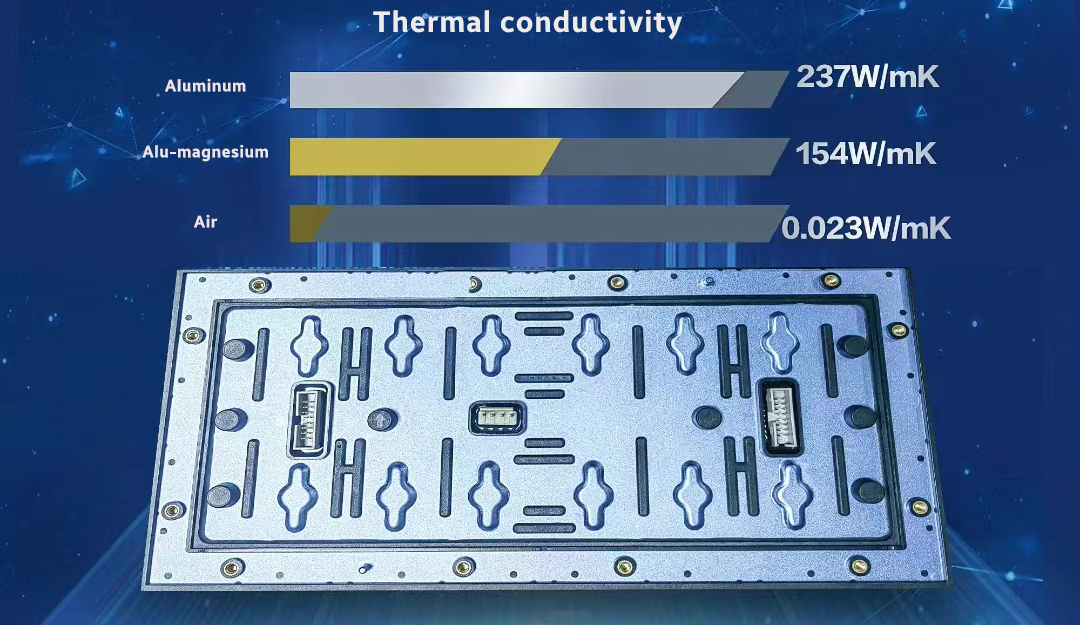
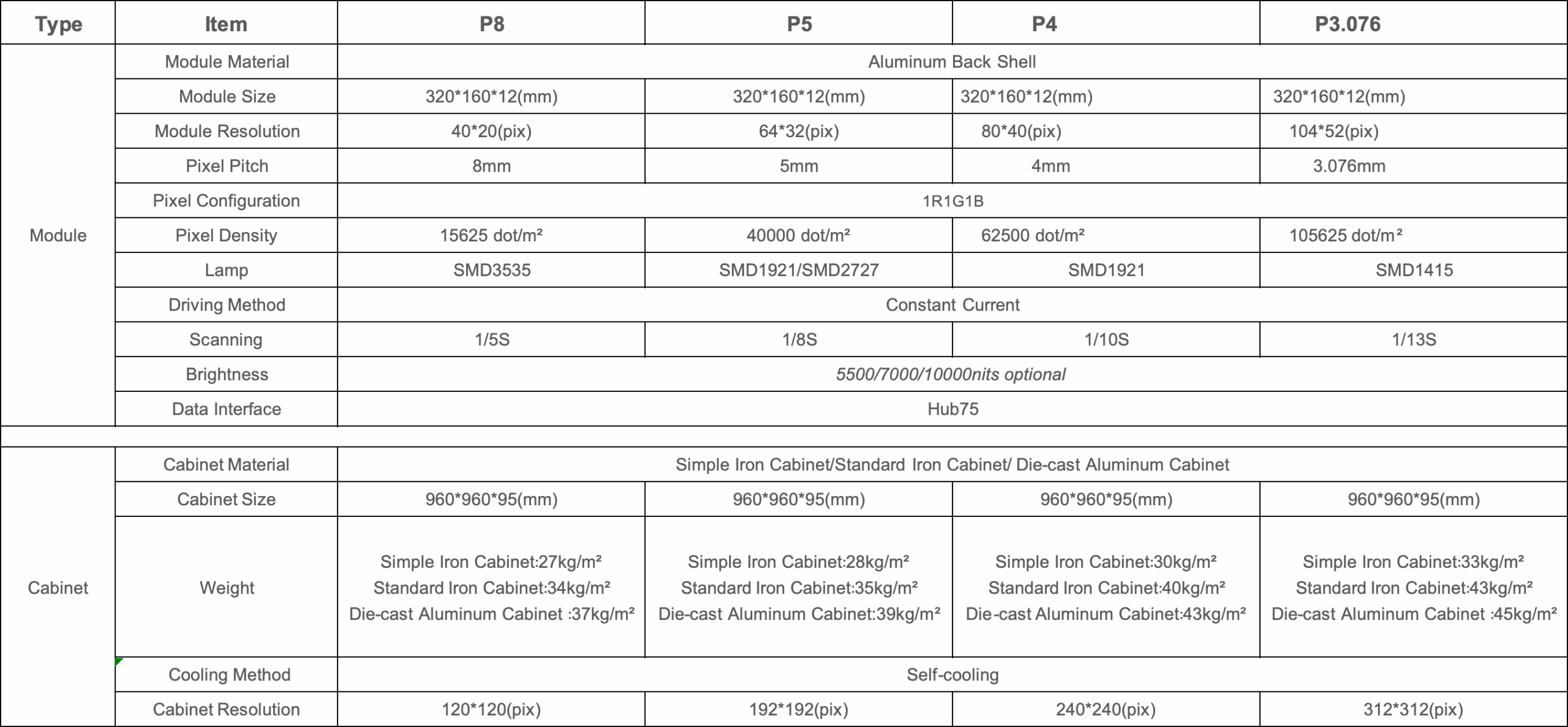
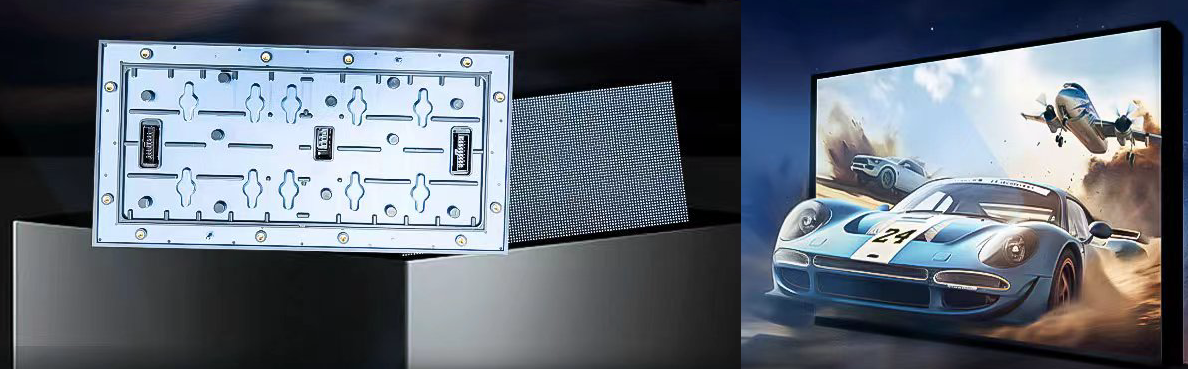
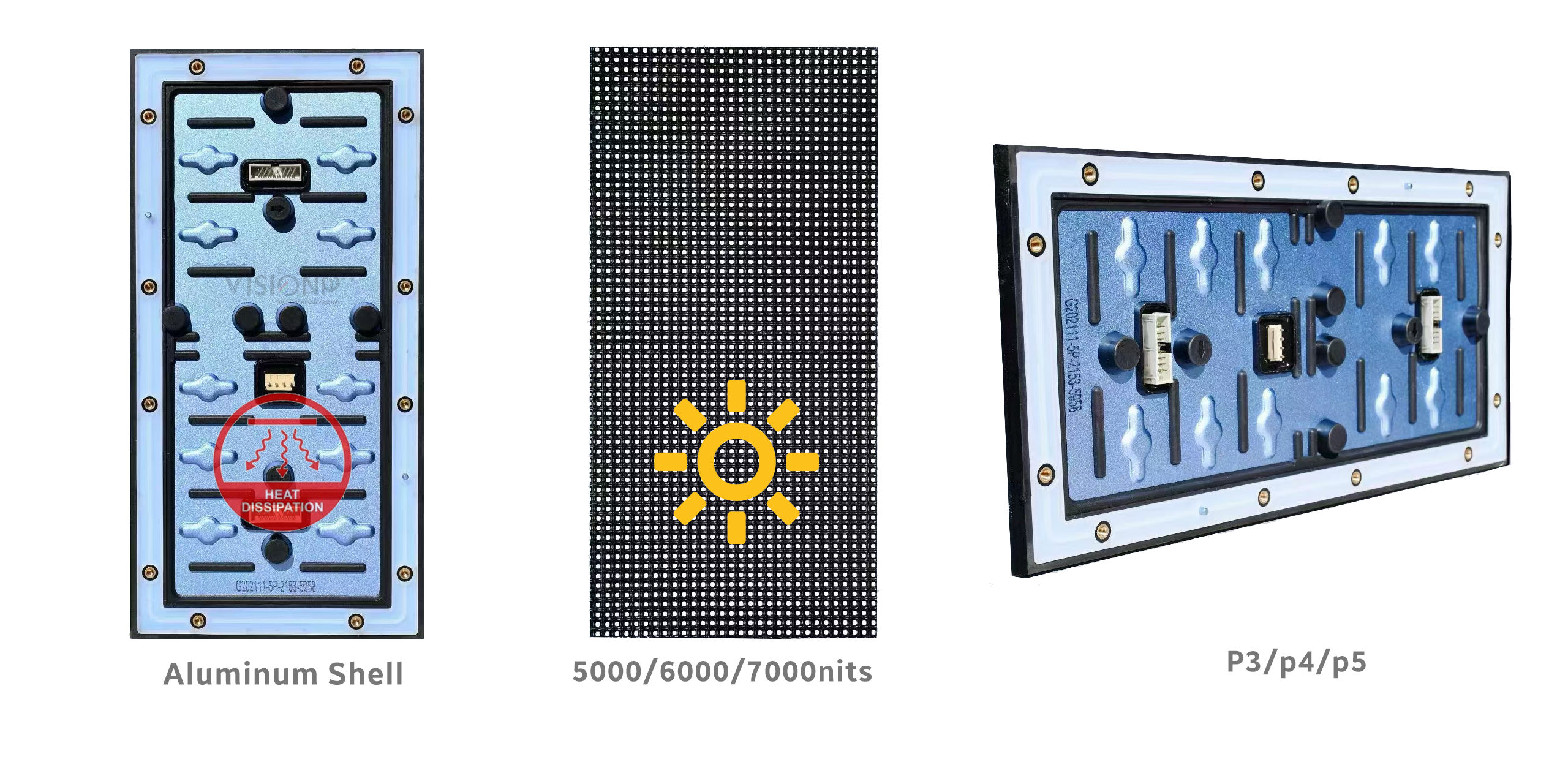
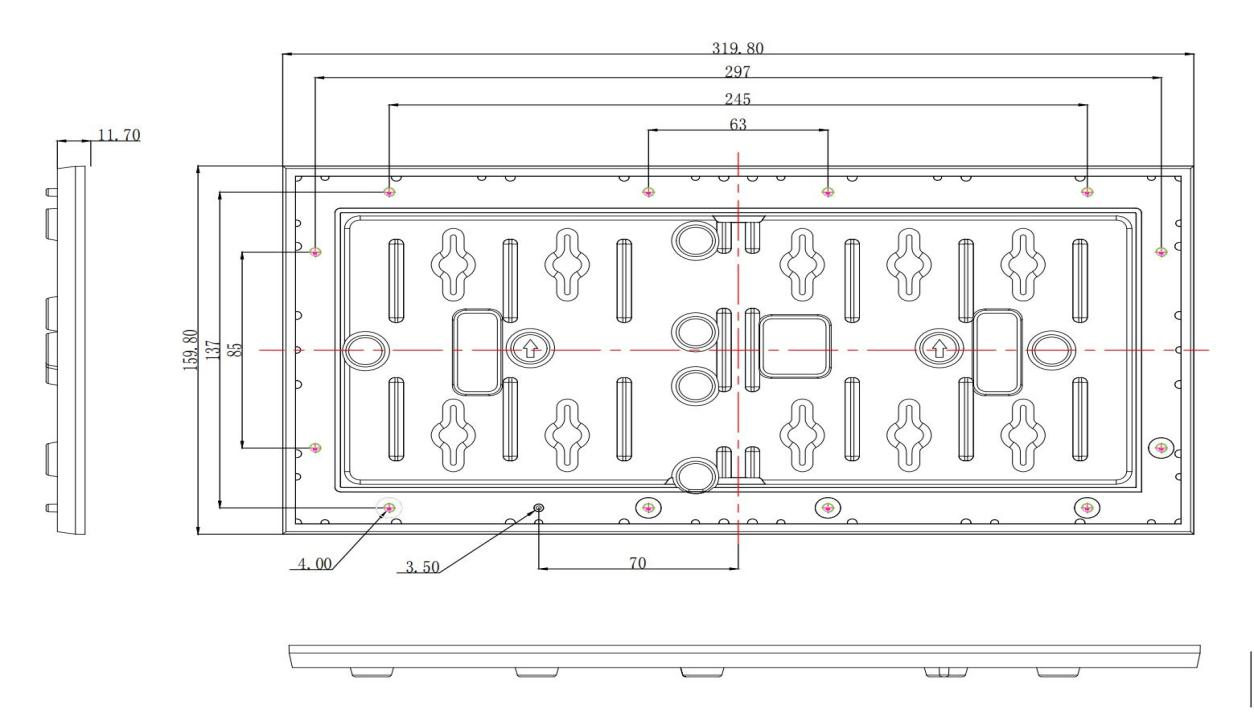
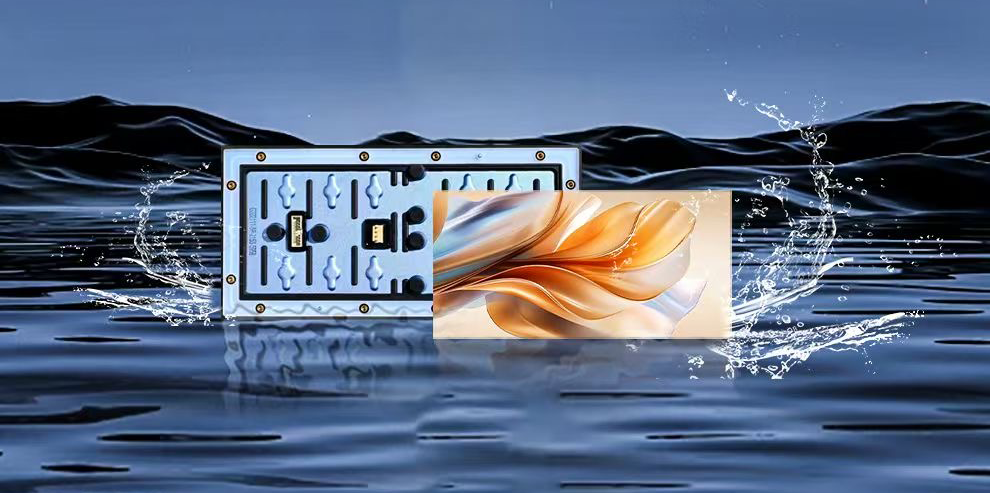
Our aluminum housing LED module fuses high-performance engineering with smart design. From its plug-and-play connection, sun-beating brightness, and battle-ready housing it’s the one light for people who don’t care to be left in the dark.
Time to upgrade your outdoor space? Contact us to set up a demo—where performance is perfection.